

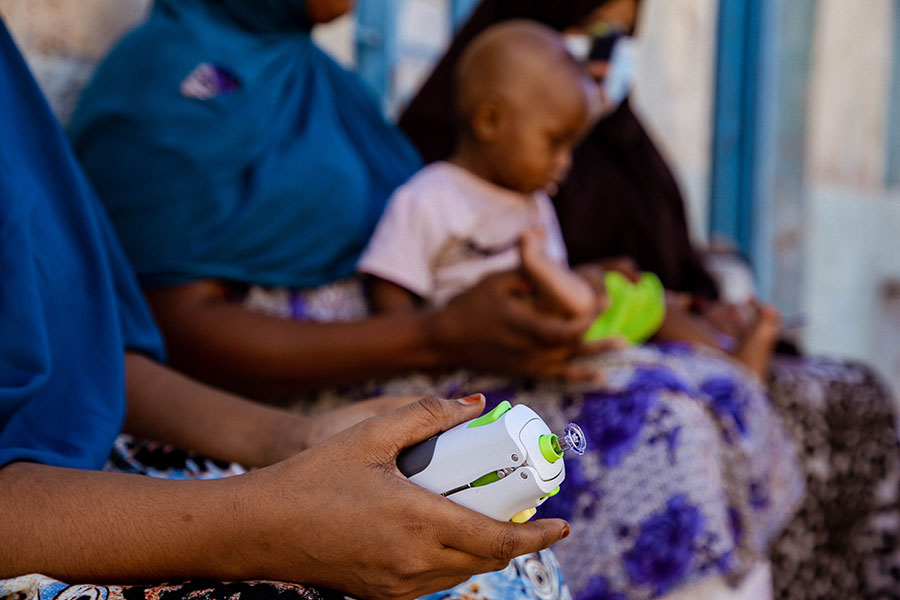
Doing Our Part in the Next Step Towards Polio Eradication
The latest 2022 WHO position paper on polio vaccines indicates that the preferred inactivated polio vaccine (IPV) schedule may be carried out using full-dose IPV or with ID fractional dose inactivated polio vaccine (fIPV) without loss of immunogenicity.
In 2023, SAGE recommended that, in areas of persistent transmission, an additional IPV dose (full or fractional) should be administered in a campaign alongside oral polio vaccine (OPV) to promote individual-level protection and reduce transmission by enhancing mucosal immunity.
Tropis is Advancing Disease Eradication
Since 2018, intradermal delivery of fractional dose inactivated polio vaccine (fIPV) has played an important role in polio immunization campaigns in Pakistan, Nigeria, and Somalia by stretching limited vaccine stocks, improving immunization coverage, and reducing immunization costs.
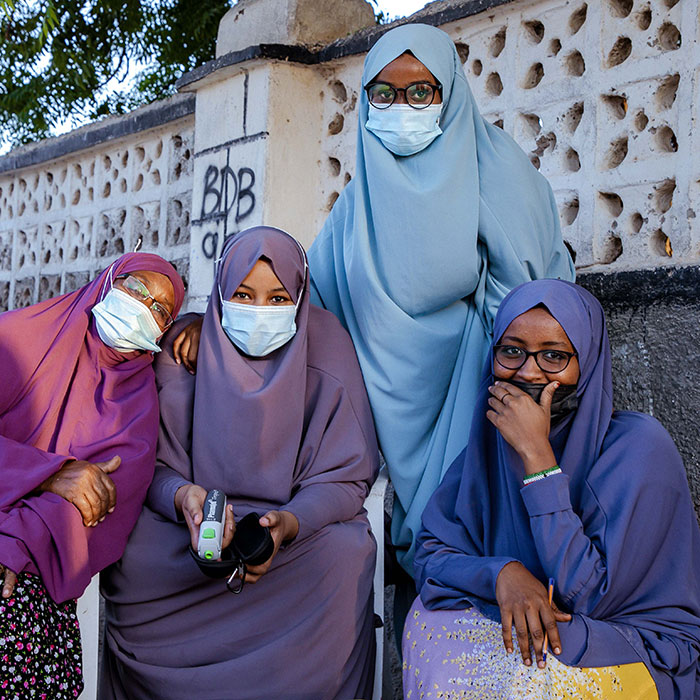
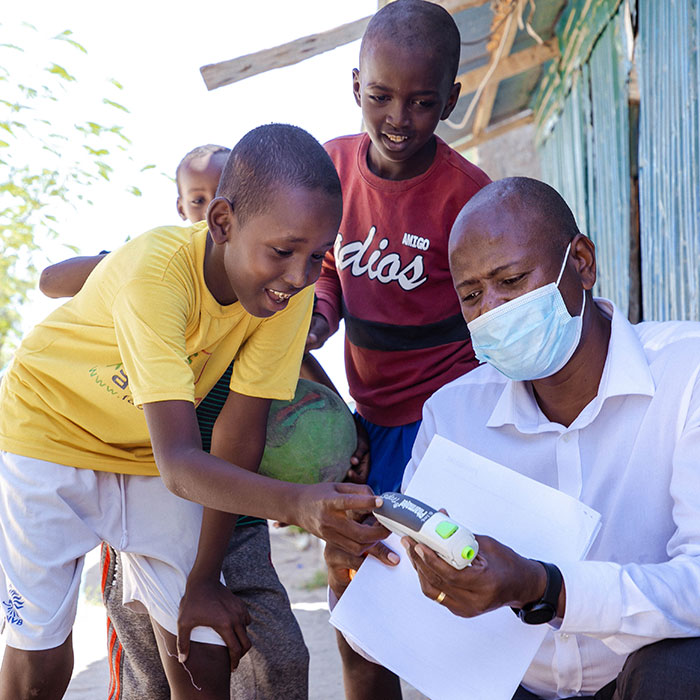
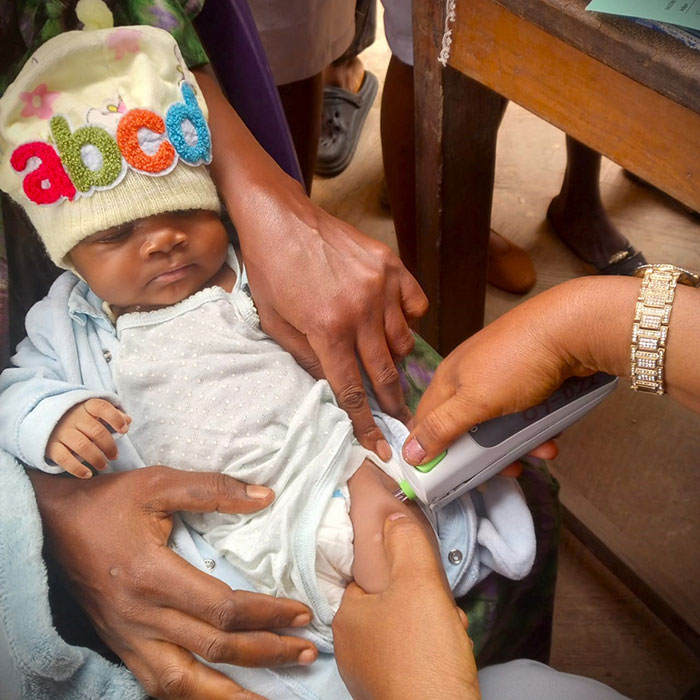
Somalia
- 2021 campaign: 110,000 children immunized
- 100% caregivers surveyed reported they would be more likely to bring their children for vaccination in a future needle-free campaign
- 100% healthcare workers surveyed said that using needle-free injectors could increase vaccination rates
- Read more about how Tropis needle-free was used to enable house-to-house administration in Somalia.
Pakistan
- 2018/2019 campaigns: > 3M immunized
- 97.6% vaccinators prefer jet injectors to needle and syringe
- 99.6% of caretakers prefer jet injectors to needle and syringe
- Mean coverage over previous IPV campaign improved 18.4%
- Read more about how Tropis needle-free was used to improve coverage and acceptability in Pakistan campaigns.
Nigeria
A publication in Vaccines highlights important benefits of Tropis ID vaccination over the intramuscular standard of care:
- Increased coverage: Coverage of the second dose of intradermal polio vaccine (IPV2) was 11.2% higher. On a relative basis, this means the odds of receiving 2 doses of IPV are doubled when Tropis ID is used.
- Cost savings: Up to 47% total immunization costs savings can be realized when using Tropis ID for IPV delivery, which equates to a potential savings for the Nigeria immunization program of ~US$50 million over a 5-year period.
- Acceptability: 97% of healthcare workers preferred Tropis ID for routine immunization, noting it is easy to operate, associated with less perceived discomfort by children during administration, and elicited a positive caregiver response.

The high coverage and strong acceptability of the jet-injectors in this setting provide support for use of this mode to administer fIPV in areas with community resistance to vaccination – a key challenge to interrupting WPV1 transmission in Pakistan and in particular, the city of Karachi.
-Healthcare Worker, Pakistan

Publications: Tropis ID Delivery for Campaigns
Campaign use, Pakistan
Results
High acceptability among infants: All the vaccinators reported that crying among children was less common with needle-free compared with with Standard of Care (SoC).
High acceptability among non-traditional Health Care Workers (HCWs): All vaccinators reported that filling the device was easy, device was appropriate size, and giving the injection was easy.
Reference
Results
Improved coverage: 7.3% higher in areas using needle-free compared with regions concurrently using SoC.
Reference
Results
Improved coverage: 18.4% higher than previous IPV campaign.
High acceptability among caregivers: 95.6% prefer needle-free.
High acceptability among non-traditional HCWs: 97.6% prefer needle-free over SoC.
Reference
Campaign use, The Gambia
Results
Acceptability among infants: Significantly less infant crying (17%) compared with full dose IM with needles (SoC @55%).
Immunogenicity: Non-inferior to SoC across all serotypes.
Throughput: 55% of injections administered in < 1 min.
Low wastage: 26% increase in useable vaccine.
Reference
House-to-house, Nigeria
Results
High coverage: Surveys indicated that 87% of children in the target age group received fIPV during the campaign.
Reference
Campaign use, Somalia
Results
High coverage: 96% in each of 2 rounds (administrative data); 98.7% reported.
Acceptability among caregivers: In one region, 42.6% of parents brought their children for immunization because they heard about the new delivery method.
Needle-free future: 97% of interviewees thought that all injectable vaccines should be administered using this needle-free injector.
The evidence from this study suggests that the impressively high coverage post-campaign was mainly due to preference for the use of intradermal needle-free injectors in addition to other factors, including the low quantity of vaccine required, the speed and ease of administration by vaccinators and the willingness of parents to bring their children due to the painless administration of the vaccine.
-Healthcare Worker, Somalia
Publications: Tropis ID Delivery for Routine Use
These studies demonstrate that Tropis ID can improve the patient and caregiver experience over the standard of care for routine immunizations, resulting in increased vaccine compliance which is an important element in eradicating polio.
Routine use, Cuba
Results
Acceptability with HCWs: HCWs preferred over BCG needle and syringe (Mantoux) for intradermal administration.
Less Adverse Events (pilot study): Over 50% less adverse events than needle and syringe.
Routine use scaled to 22 clinics, Nigeria
Results
Coverage: up to 11.2% improved coverage compared with needle delivery.
Cost savings: all scaled scenarios show needle-free is cost saving up to 47%; could save ~US $50 million over a 5-year period.
Clinic throughput: 11% faster than SoC.
High acceptability among caregivers: 94% like the device with 84% noting the child’s response (less or no crying compared with SoC).
High acceptability among HCWs: 97% prefer needle-free over SoC; 95% said it was easier to use; 94% said there was less discomfort.
Reference
Implementation Experience is the Key to Success
PharmaJet is happy to support you in integrating Tropis fIPV into your routine immunization and campaign programs.
“Given the ongoing IPV shortage and available data on ID IPV, the WHO recommends that countries adopt a two fractional dose IPV schedule in the routine immunization and outbreak response.”
WHO Strategic Advisory Group of Experts Polio Working Group
“SAGE WG suggests that it is important to gain more implementation experience both in routine and campaign settings to guide future policy.”
WHO Strategic Advisory Group of Experts Polio Working Group
“Countries that administer more than 100,000 doses of IPV each year and have the capacity to adequately train health care workers and supervise implementation should immediately begin to prepare to implement a fractional dose IPV schedule.”
Technical Advisory Group on Vaccine-preventable Diseases (TAG) Pan American Health Organization (PAHO)
“… at the beginning I thought it would be hard to learn and slow…but if we work with two people with one preparing, it is much faster….vaccinators quickly became proficient with this syringe without a needle technology”
Cambodian Healthcare Worker