

Unlocking the Full Potential of Immunization: The Case for Intradermal Delivery
Successful immunization depends not only on the antigen used but also on how and where it is delivered. Most vaccines and therapeutic injectables today are administered via subcutaneous (SC) or intramuscular (IM) routes. These routes have become standard, but are they the most effective?
The skin, often overlooked, is a powerful immune organ with a dense population of immunocompetent cells, particularly dendritic cells, whose activation is key to developing a robust and lasting immune response. Additionally, the high density of lymphatic vessels in the skin allows for rapid immune cell and macromolecule trafficking to lymph nodes, facilitating faster and more effective immune system activation.
This makes intradermal (ID) delivery a promising alternative. By targeting the dermis, ID delivery engages the immune system more directly and efficiently than IM or SC injections. It opens new doors for formulation innovation, potentially allowing for smaller doses of antigen and reducing or eliminating the need for adjuvants and excipients like lipid nanoparticles (LNPs). However, despite its immunological advantages, ID delivery remains underutilized, largely due to implementation challenges, until now.
Understanding the Skin: A Complex Immune Interface
The skin plays a dual role in immune defense: It forms the first physical barrier against pathogens and plays a critical role in activating the body’s adaptive immune response.
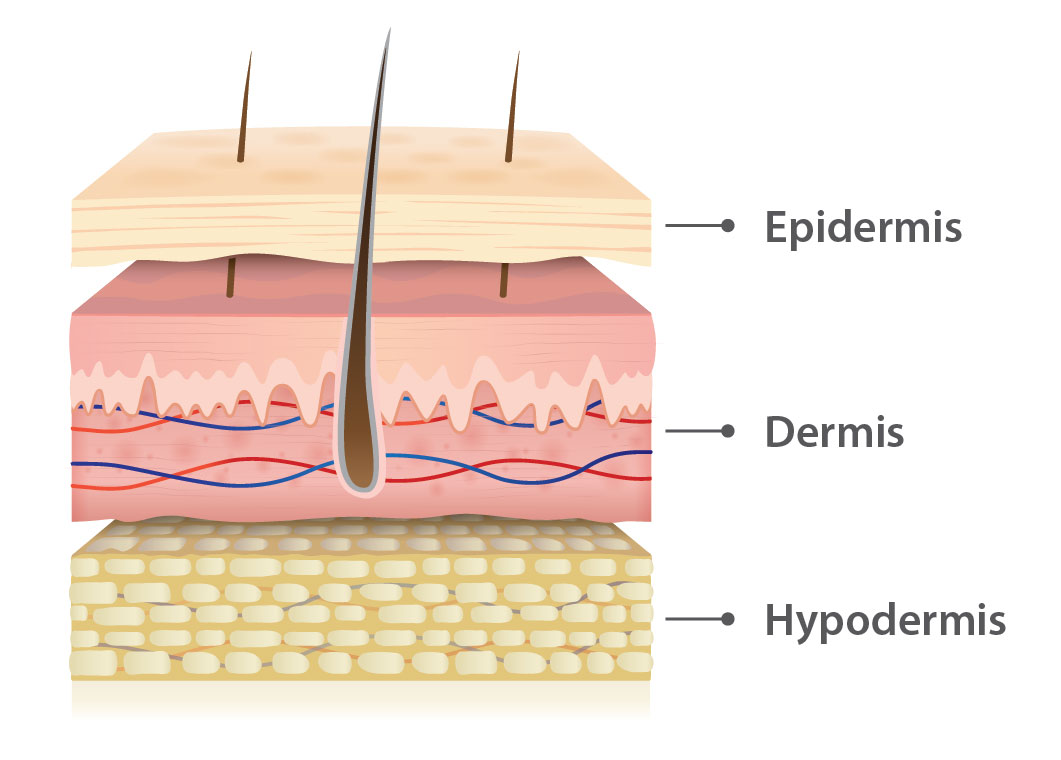
The Skin’s Three Layers:
- Epidermis: The outermost layer serves as a physical barrier and houses specialized immune cells, such as Langerhans cells, which detect and respond to pathogens.
- Dermis: Positioned between the epidermis and hypodermis, this layer is highly vascularized and lymphatically rich. It contains a diverse population of antigen-presenting cells (APCs), including dendritic cells, monocytes, and macrophages, making it a highly strategic site for vaccine delivery.
- Hypodermis: The deepest layer consists of fat and connective tissue, providing insulation and protection. IM and SC injections often deliver antigens to this area, bypassing the immunologically rich dermis.
Why ID Delivery Makes Sense
ID delivery uniquely stimulates both cellular and humoral arms of the immune system—resulting in a more effective and lasting response.
- Antigen Presentation: Dendritic and Langerhans cells in the dermis extend long projections to efficiently capture antigens and initiate a robust innate immune response.
- Efficient Trafficking: Antigens and APCs migrate rapidly through the skin’s lymphatic network to local lymph nodes—critical for initiating adaptive immunity and generating CD4+ and CD8+ T cell and antibody responses.
- Long-Lasting Protection: Skin-resident APCs can even travel to the bone marrow to activate naive T cells, while dermal dendritic cells support germinal center formation and B cell maturation, resulting in long-lived antibody responses.
- Lower Reactogenicity: Clinical studies show that ID delivery reduces systemic side effects compared to IM injections.
- Mucosal immunity and cross protection: Improving the performance of prophylactic and therapeutics vaccines.
The Problems with the Traditional ID Technique
Despite its benefits, ID delivery is not common in clinical practice due to the challenges with the standard Mantoux technique, developed over 111 years ago to test for tuberculosis (TB) infection.
- Technical Complexity: Mantoux requires precise needle placement at a shallow angle to raise a skin bleb. This technique is difficult to master, requiring extensive training and careful handling to avoid incorrect depth or dose.
- Inconsistent Outcomes: Studies show that up to 70% of injections using Mantoux are delivered to the wrong tissue layer—compromising efficacy
- Patient Experience: Mantoux is often painful and associated with vaccine hesitancy.
- Logistical Challenges: Needle-based methods pose risks such as needlestick injuries. They require hazardous waste disposal and are not ideal for large-scale immunization campaigns.
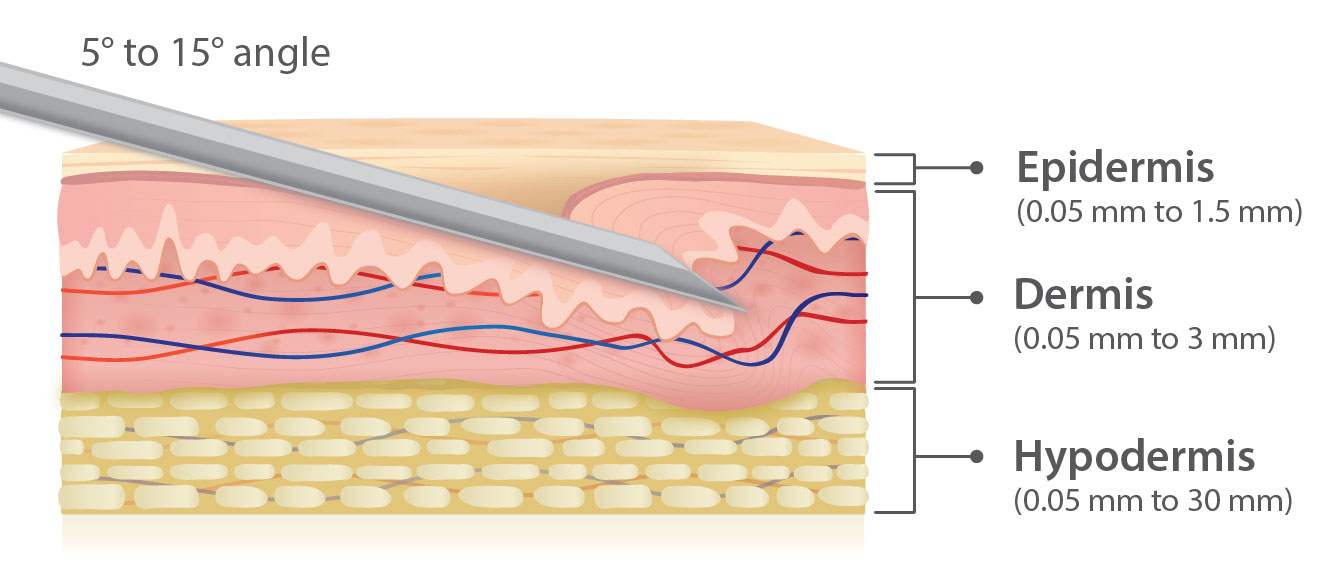
PharmaJet® Tropis®: An Innovative Solution for ID Delivery
PharmaJet’s Tropis device was designed to overcome the challenges of traditional ID delivery.
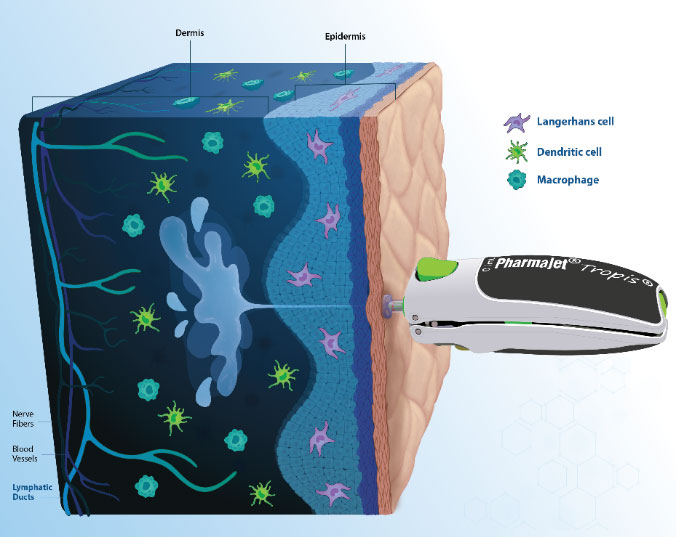
- Needle-Free Precision: Tropis uses a spring-powered mechanism to deliver a narrow, high-speed stream of fluid that penetrates the skin to a precise depth—consistently targeting the dermis without needles.
- Enhanced User and Patient Experience: In clinical studies, 87% of recipients reported no pain with Tropis needle-free injections. In another study, researchers recorded 54% fewer adverse events with Tropis compared with Mantoux needle delivery.
- Validated and Trusted: Tropis is registered in 10 countries, CE Marked and WHO prequalified, making it suitable for global deployment.
- Proven at Scale: Tropis has been used to deliver over 12 million needle-free injections as part of the Global Polio Eradication Initiative and was pivotal in the emergency deployment of nucleic acid vaccines during the COVID-19 pandemic.
The dermis is well positioned to reshape the future of immunization and treatment. ID delivery can offer enhanced, longer-lasting protection, mucosal immunity, and cross protection with less pain and fewer side effects. The PharmaJet Tropis needle-free solution enables the full potential of vaccines and therapeutics through precise, safe, scalable, and effective intradermal delivery.
References available upon request.