


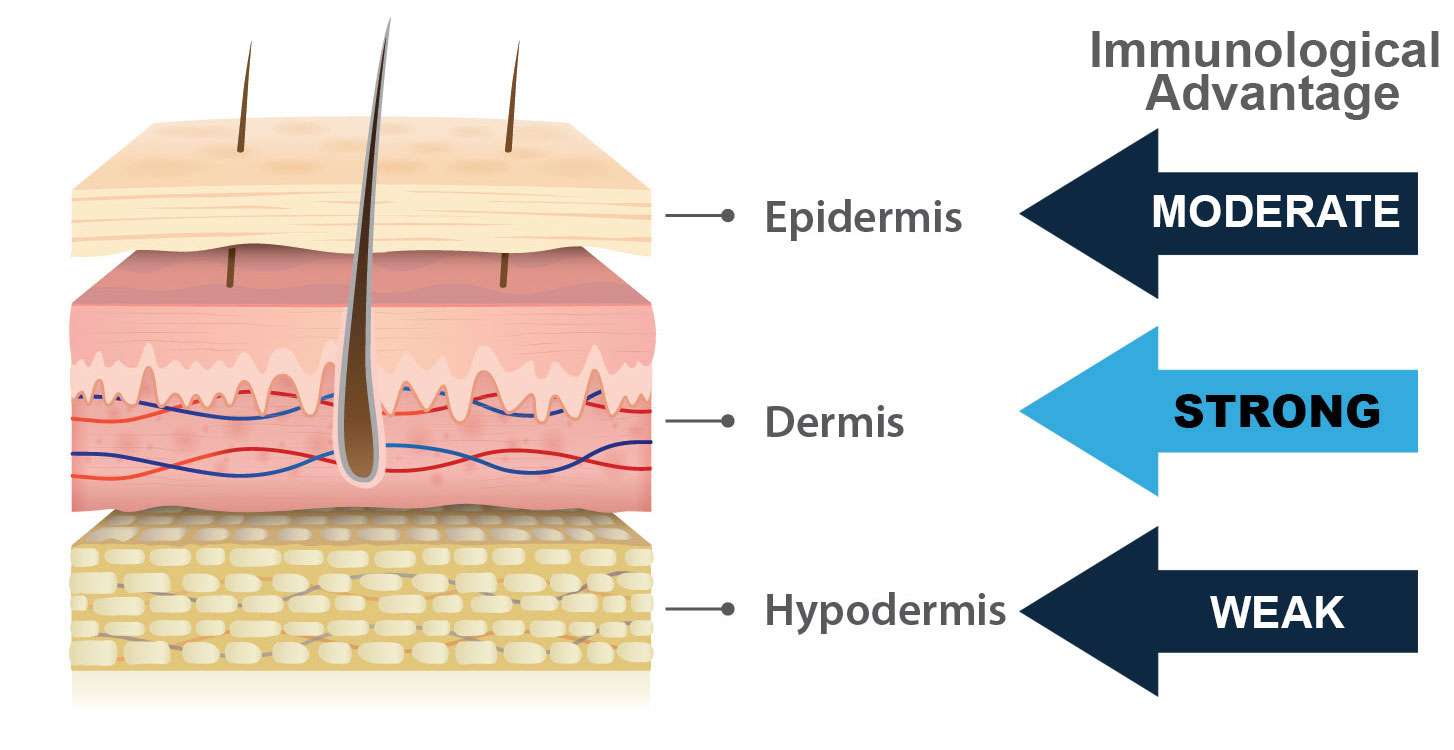
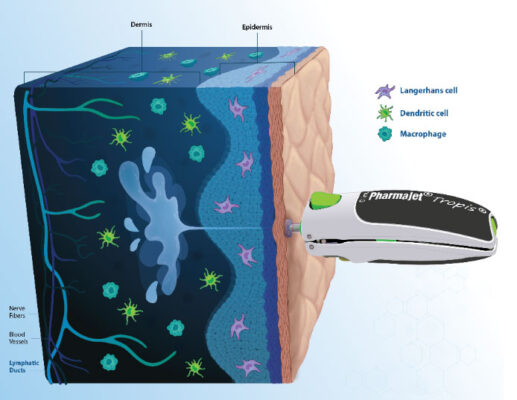
The Skin’s Three Layers1,2
- Epidermis: The outermost layer serves as a physical barrier and houses specialized immune cells, such as Langerhans cells, which detect and respond to pathogens.
- Dermis: Positioned between the epidermis and hypodermis, this layer is rich in blood vessels and immune cells. It contains a diverse population of antigen-presenting cells (APCs), including dendritic cells, monocytes, and macrophages—making it a highly strategic site for vaccine delivery.
- Hypodermis: The deepest layer consists of fat and connective tissue, providing insulation and protection. Regrettably, intramuscular and subcutaneous injections bypass the immunologically rich dermis.
Read our blog to learn how leveraging the potential the skin can transform the way you develop vaccines to control and prevent infectious diseases.
Rethinking Traditional Injection Routes: ID Delivery Benefits
Intradermal (ID) delivery engages the immune system more directly than traditional intramuscular (IM) injection methods, making it ideal for prophylactic and therapeutic vaccine administration. It offers enhanced, long-lasting immunity with fewer side effects:
- Duration – Induces long-lived antibody responses
- Dermal Dendritic Cells and Langerhans cells are pivotal at promoting follicular helper CD4+ T cell differentiation, germinal centers formation and B cell maturation3
- Promotes CD8+ T cell responses
- Skin resident APCs have the ability to migrate to lymph nodes and bone marrow, to present processed antigens with MHC Class I and to initiate CD8+ T cell responses2,4,5
- Breadth of antibody responses6,7
- Polyfunctional and durable T cell responses6,8
Benefits of ID delivery
- Durable antibody response6,8,9
- Mucosal immunity7
- Cross-reactive antibodies6,7
- T cell responses8,16
- Amenable to self-administration
Challenges of Traditional ID Delivery
- Up to 70% of injections delivered to the wrong depth.10
- Technically difficult requiring extensive training and precision.
- High wastage rates.
- Slow, painful, inconsistent, high AEs, and needle-related risks.11
- Not scalable, unsuitable for outbreak response campaigns.12
Mantoux technique
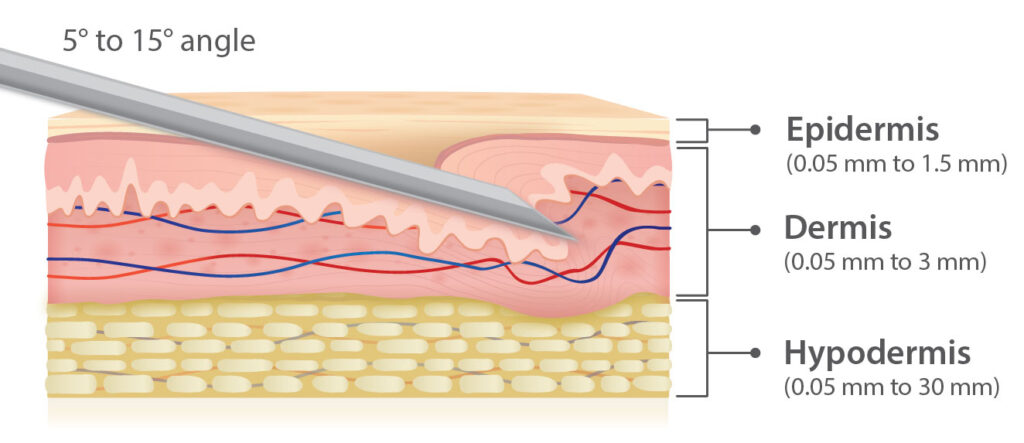
PharmaJet Tropis® was developed with support from the WHO, PATH, CDC, and Bill & Melinda Gates Foundation, as an alternative to needles to overcome obstacles associated with ID delivery using the Mantoux technique. Tropis enables the full potential of vaccines and therapeutics through precise, safe, scalable, and effective intradermal delivery.
Intradermal Delivery
Mantoux Technique (Needle)
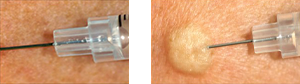
- Technically difficult
- Slow
- Painful
- 13% adverse events13
Needle-free Technique (Tropis)
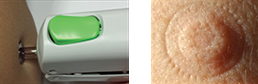
- Simple
- Very rapid (~0.1 sec)
- Consistent
- 6% adverse events (54% reduction)13
Compare for Yourself: Mantoux vs. Needle-free
These videos capture the patient experience using needle-free intradermal delivery compared to Mantoux with needle and syringe in Nigeria.
In this video, Mantoux technique takes 18 seconds from needle insertion to completion; baby showing pain.
Comparatively, Tropis injection is a < 0.1 second procedure. Baby’s expression does not indicate pain.
- The 1st 10 seconds show a baby responding to MR injection with needles.
- The next 10 seconds show same child receiving IPV intradermally using needle-free Tropis.
Tropis is Ideal for ID Delivery
eliminating the challenges of Mantoux
- Safe ID delivery with reduced pain
- 87% of recipients report no pain13
- 54% reduced adverse events compared with Mantoux11
- High acceptability
- Preferred by > 95% healthcare providers14,15
- 25% faster than delivery with needles (watch video)
- Precise dose and depth
- Validated and trusted
- WHO prequalified and CE marked
- Registered in multiple countries
- Proven at scale
- 20 million+ needle-free syringes supplied for pediatric injections
eliminating the challenges of Mantoux
- 1. Kupper et al., 2004
- 2. Duffy et al., 2012
- 3. Levin et al., 2017
- 4. Best et al.,2009
- 5. Lind et al.,2012
- 6. Kumar et al., 2025
- 7. Hernandez-Franco et al., 2021
- 8. Alberer et al., 2017
- 9. West & Bennett., 2017
- 10. Micheels et al., 2018
- 11. Resik et al., 2025
- 12. Bashorun et al., 2022
- 13. Soonawala et al., 2013
- 14. Daly et al., 2020
- 15. Mohan, et al., 2025
- 16. Peng et al., 2023