

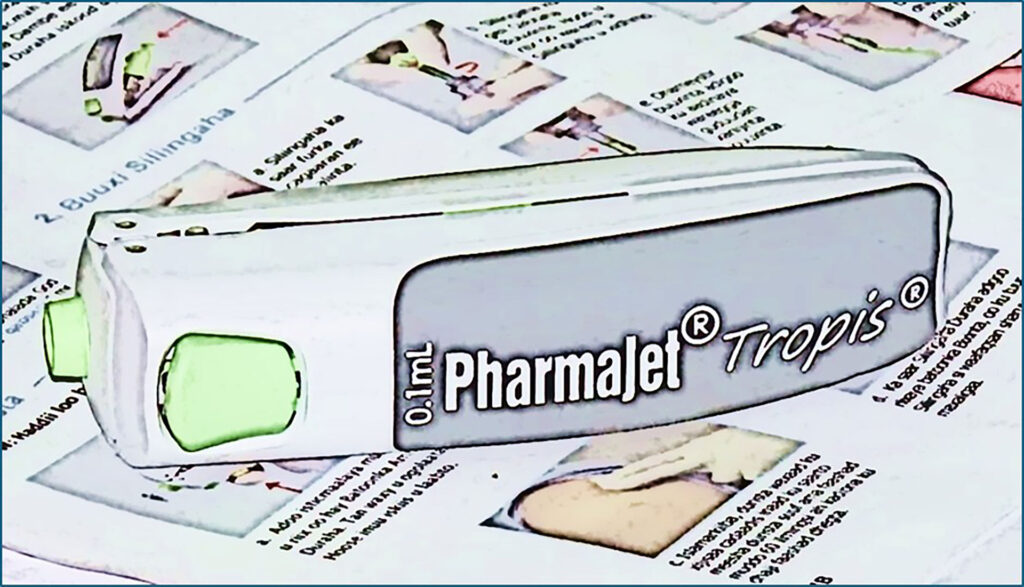
Recent crises have shown that pandemics don’t simply strain health systems—they disrupt entire societies. Supply chains falter under global demand. Regulatory processes slow when speed is most vital. Health systems run short on qualified vaccinators. And affordability barriers delay access in the communities that need protection first.
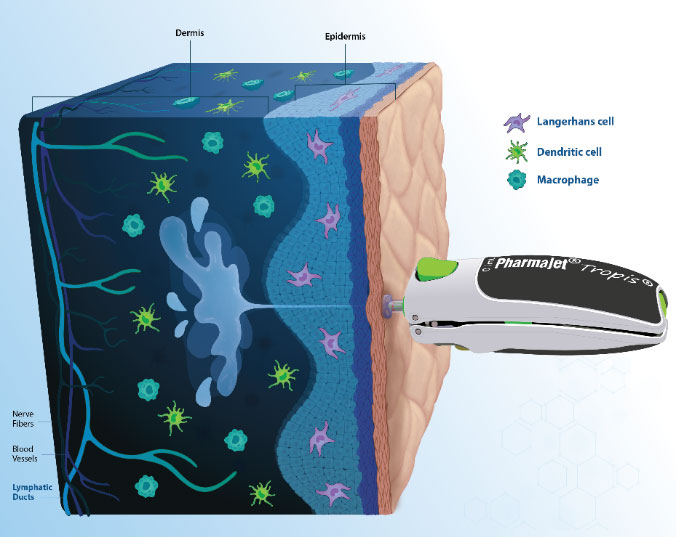
Successful immunization depends not only on the antigen used but also on how and where it is delivered. Most vaccines and therapeutic injectables today are administered via subcutaneous (SC) or intramuscular (IM) routes. These routes have become standard, but are they the most effective?

Last summer, when monkeypox (mpox, in 2024) was declared a national1 and global health emergency, a shortage of the mpox vaccine was announced2. In August 2022, the US Food and Drug Administration (USFDA) authorized3 reduced dose (0.1 mL) intradermal (ID) delivery of mpox vaccine to address the supply gaps and extend limited stocks. The EU followed with their own recommendations on intradermal delivery. 4
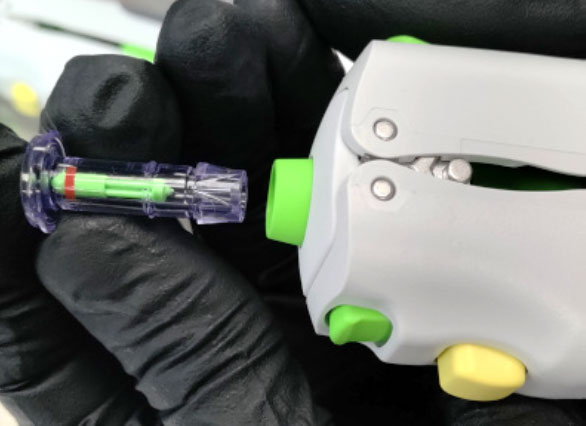
Precision of dose and depth delivery with our needle-free jet injections is our highest priority and we have the Quality credentials to prove it.At PharmaJet, we are proud to display the framed certificate indicating we are the first and only Needle-free Injection Systems (NFIS) to achieve WHO prequalification (E008/050, E008/071), which is a requirement for...

PharmaJet Expands Manufacturing Capacity to meet Demand for its Needle-free Injection SystemIt’s all about teamwork, collaboration, and QualityPharmaJet has expanded its manufacturing capacity to meet the increasing demand as our partners commercialize their vaccines and pharmaceutical products. Read more below about the extraordinary effort and commitment our Quality and Operations teams and our collaborators demonstrated...